
Trump Puts Congress on Notice: No Bills Signed Unless SAVE Act Advances
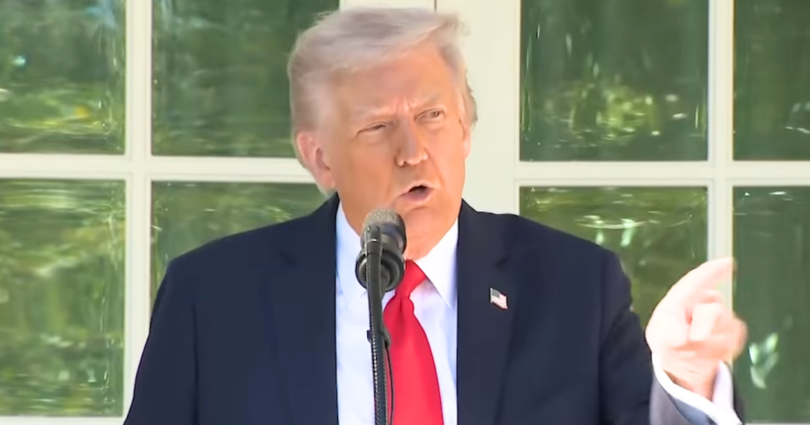
President Donald Trump signaled Sunday that he may block other legislation from becoming law unless Congress advances a sweeping election integrity proposal, increasing pressure on lawmakers to move forward with the Safeguard American Voter Eligibility (SAVE) Act before addressing other priorities.
The president indicated he would refuse to sign additional bills until the Senate takes up the measure, which would tighten voting requirements nationwide by requiring proof of U.S. citizenship when registering to vote and implementing stricter identification standards at polling places.
Trump described the legislation as a top priority ahead of the upcoming midterm elections and argued it should be considered before other policy matters.
“I, as President, will not sign other Bills until this is passed, AND NOT THE WATERED DOWN VERSION—GO FOR THE GOLD: MUST SHOW VOTER I.D. & PROOF OF CITIZENSHIP: NO MAIL-IN BALLOTS EXCEPT FOR MILITARY – ILLNESS, DISABILITY…,” Trump wrote in a Truth Social post.
Trump also encouraged Senate Republicans to explore using a procedural strategy known as a “talking filibuster.”
The approach would require senators who oppose the legislation to continuously hold the Senate floor in order to block a vote.
Supporters argue that if opponents eventually stop speaking, Republicans could advance the bill with a simple majority rather than reaching the 60 votes normally required to overcome a filibuster.
In the same message, Trump praised conservative activist Scott Pressler for highlighting the idea during a television appearance.
“Great Job by hard working Scott Pressler on Fox & Friends talking about using the Filibuster, or Talking Filibuster, in order to pass THE SAVE AMERICA ACT,” Trump wrote, adding that the proposal “must be done immediately” and should take precedence over other legislative efforts.
The SAVE Act has cleared the House in different forms over the years and gained renewed attention earlier this year when lawmakers approved it again.
The measure now faces a more difficult path in the Senate, where Republicans hold only a narrow majority and traditional procedural rules remain in place, according to The Hill.
Senate Majority Leader John Thune (R-SD) has faced growing pressure from Trump and some conservative allies to consider the talking filibuster strategy.
Thune has previously expressed support for maintaining the Senate’s long-standing 60-vote threshold for most legislation and has not publicly indicated he plans to abandon that position despite the president’s calls for faster action.
Democratic leaders have sharply criticized the proposal.
Senate Minority Leader Chuck Schumer (D-NY) said Democrats would strongly oppose the measure and warned it could prevent millions of eligible Americans from voting.
“The SAVE Act is Jim Crow 2.0. It would disenfranchise tens of millions of people,” Schumer wrote on X, adding that Senate Democrats would not provide the votes necessary for passage.
Schumer also suggested that Trump’s position could stall activity on Capitol Hill if the president refuses to approve other measures.
“If Trump is saying he won’t sign any bills until the SAVE Act is passed, then so be it: there will be total gridlock in the Senate,” he said.
The measure would require people registering to vote to provide documents confirming U.S. citizenship, such as a passport or birth certificate.
It would also mandate that voters present photo identification when casting ballots in person and require copies of approved identification for absentee ballot requests.
Republicans backing the legislation argue the changes are intended to strengthen election security and restore confidence in the voting system.
House Speaker Mike Johnson (R-LA) said identification is already required for many everyday activities.
“Americans need ID to drive, to open a bank account and apply for government assistance,” Johnson said, according to Newsweek. “So why would voting be any different than that?”
Democrats, however, maintain that the proposal could create new obstacles for eligible voters and note that voting by noncitizens is already illegal and widely considered rare.
House Minority Leader Hakeem Jeffries (D-NY) argued the legislation would suppress voter participation rather than address genuine election security concerns.
The debate comes as Congress faces several pressing legislative challenges, including negotiations over federal funding and efforts to finance agencies such as the Department of Homeland Security.
Trump’s warning that he may withhold his signature from other bills unless the SAVE Act advances could complicate those discussions and intensify partisan tensions on Capitol Hill.
Continue Scrolling for the Comments
Leave a Comment