
Supreme Court Allows Pro-Life Group to Challenge New Jersey Subpoena in Major Free Speech Win
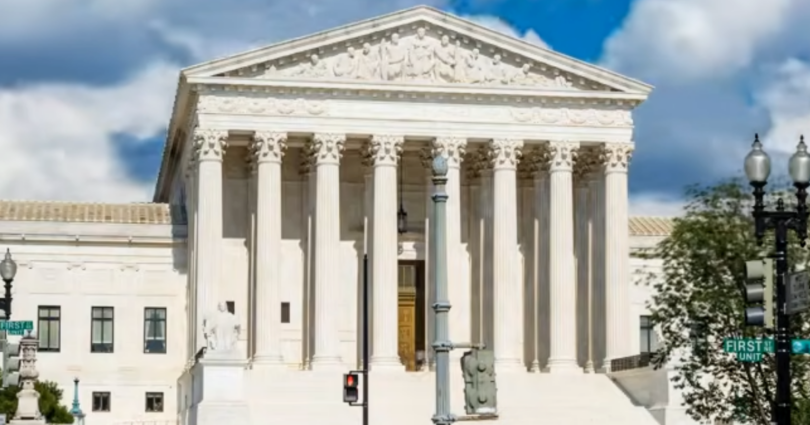
A unanimous Supreme Court ruling on Wednesday allowed a New Jersey faith-based pregnancy center network to continue challenging a state subpoena in federal court, delivering a procedural victory in a dispute centered on donor privacy and the limits of state investigative power.
The case involves First Choice Women’s Resource Centers, a Christian nonprofit that operates multiple pregnancy centers across New Jersey.
The organization provides counseling, ultrasounds, parenting classes, and material assistance to women facing unplanned pregnancies.
State authorities opened an investigation into whether the group misrepresented its services or fundraising practices and issued subpoenas seeking internal documents, including donor-related information.
The Supreme Court did not decide whether the state’s investigation was lawful.
Instead, the justices addressed a narrower threshold question: whether First Choice could bring its constitutional challenge in federal court before complying with the subpoena.
The Court ruled unanimously that it could proceed, keeping the dispute alive at an early procedural stage.
Justice Neil Gorsuch, writing for the Court, focused on the constitutional implications of compelled disclosure.
He noted that forcing organizations to reveal donor identities can raise First Amendment concerns because it may discourage individuals from supporting groups engaged in controversial or unpopular advocacy.
“An official demand for private donor information is enough to discourage reasonable individuals from associating with a group. It is enough to discourage groups from expressing dissident views,” Gorsuch wrote, according to Fox News.
The opinion emphasized that longstanding precedent protects against government actions that could chill association, particularly when disclosure requirements affect political, social, or religious groups.
The Court concluded that First Choice was entitled to have those claims heard in federal court before being required to comply with the subpoena.
New Jersey officials defended the investigation as a legitimate exercise of consumer protection authority.
They argued that state law allows regulators to examine whether nonprofit organizations engage in misleading conduct and said the subpoenas were issued to determine whether any violations occurred.
“Today’s procedural decision holds only that First Choice can pursue its challenge to our subpoena, not that its challenge should prevail,” New Jersey Attorney General Jennifer Davenport said. “New Jersey law makes clear that nonprofits cannot deceive or defraud New Jerseyans. We will continue to enforce our fraud laws without fear or favor.”
Supporters of First Choice described the ruling as an important reinforcement of constitutional protections for religious organizations.
They argued that demands for donor and internal organizational records can have a chilling effect on participation in faith-based groups, particularly those engaged in politically sensitive issues such as abortion, The Daily Wire reported.
Alliance Defending Freedom attorney Erin Hawley, who argued on behalf of the organization, said the investigation was driven by disagreement over the group’s mission rather than evidence of wrongdoing.
She contended that targeting a religious ministry for its pro-life stance raises serious constitutional concerns.
“New Jersey’s attorney general targeted First Choice… simply because of its pro-life views,” Hawley said. “That is blatantly unconstitutional.”
First Choice leadership has maintained that the organization has operated for decades without substantiated complaints.
Executives say donor support has been essential to sustaining services and have characterized the subpoena as an attempt to pressure the organization’s operations and messaging.
While the ruling does not resolve the underlying dispute, it ensures that First Choice can continue its legal challenge in federal court.
The case now returns to lower courts, where judges will consider the broader constitutional questions involving investigative authority, donor privacy, and First Amendment protections for religious organizations.
Continue Scrolling for the Comments
Leave a Comment