
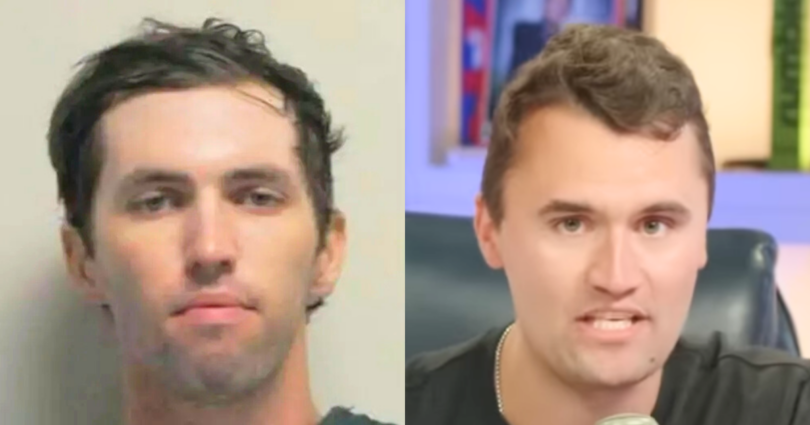
A courtroom battle over the fate of Tyler Robinson intensified this week as Utah prosecutors submitted a forceful legal document demanding his case proceed to trial without delay.
The move comes on the heels of a marathon five-day preliminary hearing held earlier this month.
Rather than rule immediately, Judge Tony Graf instructed both legal teams to submit a series of written briefs before he renders his decision on whether sufficient grounds exist for trial.
Tuesday’s filing was blunt in its confidence. Prosecutors described the situation in stark terms, writing that “this is likely as straight-forward a bindover decision as this Court will ever see.”
At the heart of the 28-page memorandum lies a chain of alleged confessions prosecutors say Robinson made to people in his inner circle.
Chief among them was his former roommate and romantic partner, Lance Twiggs, who allegedly received a written admission from Robinson stating, “I had the opportunity to take out Charlie Kirk, and I took it.”
That single statement, according to the filing, is just one thread in a much larger web of incriminating evidence.
Prosecutors contend that when combined with additional admissions, the confessions alone establish probable cause for the bulk of the charges against Robinson.
The state’s brief doesn’t stop there. Investigators say forensic testing, video surveillance, and witness accounts round out the picture, filling in gaps left by the confessions.
As prosecutors put it, “DNA testing, surveillance video, and eyewitness testimony buttress those elements and demonstrate probable cause to support the remaining elements. The Court should bind Defendant for trial over on all counts.”
Twiggs’ account plays a pivotal role in the narrative prosecutors have constructed.
According to the filing, Robinson confided in him that the assassination had been in the works for roughly a week before it happened on September 10, 2025, at Utah Valley University.
Investigators further allege that Robinson floated the idea of going back for the rifle once the shooting was over. A later message attributed to Robinson signaled his intent to surrender, reading, “I’m going to turn myself in willingly.”
Physical evidence forms another pillar of the state’s argument.
Surveillance footage allegedly places Robinson at multiple points around the UVU campus in the hours surrounding the shooting, tracking his movements both before and after the attack.
Forensic analysts say they pulled DNA evidence from several objects tied directly to the crime, including what investigators believe was the murder weapon itself.
Additional DNA turned up on a spent cartridge casing, a towel, and a screwdriver recovered during the investigation.
Witnesses on the scene also gave accounts placing a shooter on a rooftop with a clear vantage point over the crowd gathered to hear Kirk speak.
That testimony was presented during the preliminary hearing proceedings.
Prosecutors say none of this evidence exists in isolation.
Instead, they argue the confessions, forensic findings, video evidence, and witness testimony collectively form an airtight case that satisfies — and exceeds — Utah’s legal bar for probable cause.
The filing also expands on the state’s theory of premeditation.
Prosecutors allege Robinson spent more than a week mapping out the assassination, specifically targeting Kirk while disregarding the safety of the thousands of bystanders gathered around him.
By firing a high-powered rifle into a densely packed crowd, prosecutors argue, Robinson knowingly put far more lives at risk than just Kirk’s.
That argument underpins several of the additional charges he faces beyond the aggravated murder count.
Robinson, age 23, remains without an entered plea as the legal proceedings unfold.
In total, he faces seven charges: one count of aggravated murder alongside six other felony and misdemeanor offenses connected to the shooting.
Capital punishment looms large over the case. Prosecutors have made clear they intend to pursue the death penalty if Robinson is convicted on the aggravated murder charge.
The legal process still has several stages ahead. Robinson’s defense team is expected to file its own written rebuttal in the coming weeks, challenging the prosecution’s characterization of the evidence.
Once the defense submits its response, prosecutors will get a final opportunity to counter before the matter heads to oral arguments, currently set for September 1.
A ruling from Judge Graf on probable cause will determine whether Robinson’s case formally advances to trial.
Continue Scrolling for the Comments
Leave a Comment