
Pastor Sparks Backlash After Calling for ‘Third Testament’ and Questioning Bible’s Authority
A California church leader is drawing renewed criticism after suggesting Christianity may require what she described as a “Third Testament,” a remark that has sparked backlash from traditional Christians who say it challenges the authority and structure of biblical scripture.
The comments, delivered during a recorded theology address, have circulated widely online and reignited debate over how far modern reinterpretation of the Bible should go within the faith.
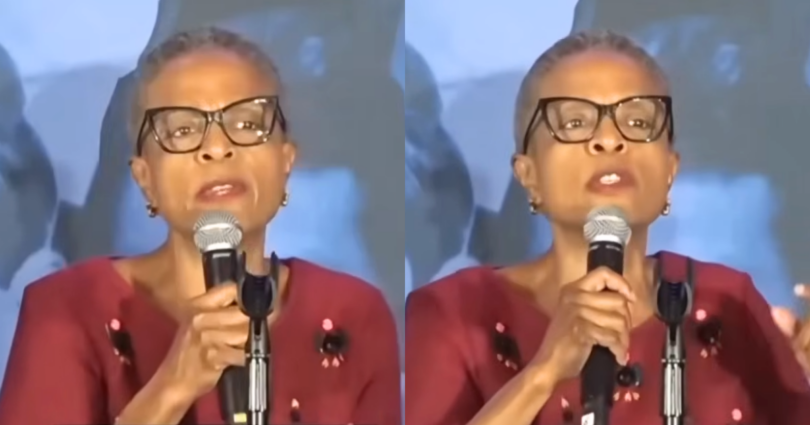
Yvette Flunder, senior pastor of City of Refuge United Church of Christ in Oakland and presiding bishop of The Fellowship of Affirming Ministries, made the remarks while reflecting on how believers engage with scripture in contemporary religious life.
“I’m of the opinion that we need a Third Testament, because the Bible has become problematic,” Flunder said during the address, framing her comments as a personal theological reflection rather than an official doctrinal position.
She pointed to passages she described as difficult to reconcile with modern Christian practice, including verses historically interpreted as endorsing slavery and instructions regarding women in church leadership.
She referenced language such as “Slaves, obey your masters as you do the Lord” and directives stating that “let the women keep silent in the churches.”
Flunder questioned how such texts should be understood today.
“And people will say, ‘well, it’s in the book.’ And I said, then we need to pull that page out,” she said.
She also drew a distinction between scripture and interpretation, stating, “It’s not the Word of God. It is words about God,” emphasizing her view that biblical writings reflect human interpretation of divine experience rather than direct, unchanging authority.
Despite her critique of literal readings of scripture, Flunder reaffirmed her personal faith. “I wake up in the morning talking to God and God talking to me,” she said, underscoring what she described as an ongoing spiritual relationship that informs her theology.
Reactions on social media were sharply critical, particularly among conservative users on X, where the comments quickly circulated.
Some users argued the remarks reflected a departure from traditional biblical teaching, with popular account, MJTruthUltra, writing, “This is why women should not be pastors…”
Others framed the statement as theologically dangerous.
“When a bishop declares God’s Word ‘problematic’ and announces she wants to write a ‘Third Testament’—this is exactly the kind of arrogance Scripture warns against,” one user wrote.
Another user warned against what they viewed as spiritual consequences, stating, “Testing God by an unbelief in His Word and Scripture is inviting trouble… she should recant and ask forgiveness.”
Additional posts were more blunt, with one user writing, “She is so wrong. Befuddled by Satan and led astray. Dangerous and stay away from her.”
Flunder has long been associated with progressive theological positions and social advocacy within Christianity.
She founded City of Refuge United Church of Christ in 1991 and later became presiding bishop of The Fellowship of Affirming Ministries, a coalition of more than 100 clergy focused on inclusion and social justice.
Her remarks highlight a longstanding divide within Christianity between biblical inerrancy—the belief that scripture is fully authoritative and divinely inspired—and more progressive approaches that emphasize historical context, lived experience, and evolving interpretation of religious texts.
She holds advanced theological degrees from the Pacific School of Religion and San Francisco Theological Seminary, where she earned a Doctor of Ministry.
In addition to her pastoral work, she is also an author, educator, and gospel musician.
As the video continues circulating online, reactions remain divided.
Critics argue the comments reflect a broader weakening of scriptural authority, while supporters say they raise difficult but necessary questions about how ancient religious texts should be understood in modern society.
The discussion has continued to gain traction across religious and social media platforms, fueling ongoing debate over doctrinal boundaries, interpretive freedom, and the limits of reimagining foundational Christian texts.
WATCH:
Continue Scrolling for the Comments
Leave a Comment