
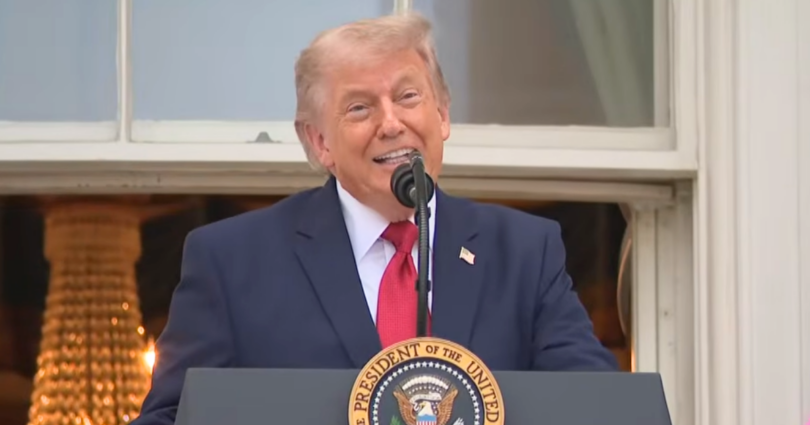
Fentanyl Deaths Plunge as Trump Leads Republican Crackdown on Cartels and Traffickers
Federal and state officials are highlighting new overdose data as evidence that the battle against fentanyl may be shifting after years of record fatalities.
Newly released figures showing steep declines in opioid-related deaths have renewed debate over what is driving the trend, with Republican leaders crediting stronger enforcement efforts while some researchers argue changes in the illegal drug supply may also be playing a role.
Florida has emerged as a key example of the changing landscape.
Interim 2025 figures from the Florida Medical Examiners Commission found opioid-caused deaths fell 42 percent during the first half of the year, while fentanyl-caused deaths dropped 46 percent.
Data also showed notable declines involving fentanyl analogs. Communities that were once among the hardest hit are now reporting measurable improvement, particularly in northwest Florida, according to USA Today.
The Pensacola-area medical district, covering Escambia, Santa Rosa, Okaloosa, and Walton counties, has seen substantial improvement after previously struggling with elevated overdose rates.
Local leaders have pointed to expanded recovery partnerships and intervention programs aimed at connecting overdose survivors with long-term treatment services.
Escambia County’s Coordinated Opioid Recovery program focuses on helping patients transition from emergency care into sustained recovery support.
“We have four nurses dedicated to just addressing those with opioid use disorder and their addiction to opiates,” Escambia EMS Chief Chris Watts said. “They actually go out and work with these patients directly and help with medication-assisted therapy and things in the field wherever they are.”
Florida Gov. Ron DeSantis (R) credited state enforcement efforts for helping drive the decline, pointing to operations under the State Assistance for Fentanyl Eradication program.
Officials say the initiative has contributed to thousands of arrests and major seizures involving illegal drugs, firearms, and cash tied to trafficking networks.
At the federal level, the Trump administration says stronger border enforcement and expanded anti-trafficking authorities are helping reduce the flow of deadly drugs into the country.
U.S. Customs and Border Protection recently reported that southwest border agents seized enough fentanyl so far this year to potentially kill more than 100 million Americans.
Officials have also issued warnings about emerging synthetic substances appearing in illicit drug markets, including medetomidine and cychlorphine.
Sara Carter, who took over the Office of National Drug Control Policy earlier this year, cited updated federal overdose figures showing fatalities trending sharply downward compared to recent years.
Administration officials have pointed to the decline as evidence that expanded anti-trafficking and enforcement efforts are having an impact on the drug supply.
“The President’s newly-released National Drug Control Strategy will continue to save American lives through renewed efforts to take the fight to the cartels and drive down illicit fentanyl in the drug supply,” Carter told The Daily Signal.
The administration has also expanded anti-cartel initiatives by designating major trafficking organizations as Foreign Terrorist Organizations while announcing additional authorities targeting illicit fentanyl and chemicals tied to its production.
Federal officials later authorized military operations aimed at suspected trafficking vessels operating near U.S. waters.
“As President of the United States, my highest duty is the defense of the country and its citizens,” Trump wrote while announcing the policy changes. “Accordingly, I hereby designate illicit fentanyl and its core precursor chemicals as Weapons of Mass Destruction.”
Lawmakers in Congress are also advancing efforts aimed at cutting off financial channels tied to narcotics trafficking operations.
South Carolina Sen. Tim Scott’s (R) FEND Off Fentanyl Act directs Treasury resources toward identifying cartel-linked financial activity and precursor supply chains.
Rep. Andy Ogles (R-TN) has introduced legislation targeting money laundering networks tied to drug trafficking, while Rep. Morgan Griffith (R-VA) highlighted the HALT Fentanyl Act as strengthening enforcement tools for fentanyl-related substances.
Rep. Chip Roy (R-TX) has separately proposed tougher penalties for fentanyl traffickers.
Some addiction researchers and harm reduction advocates caution that enforcement alone may not fully explain the decline in overdose deaths.
Experts interviewed by WUWF point to evolving drug supply trends, including increased presence of substances such as xylazine and medetomidine.
Researchers say both enforcement efforts and changes in drug composition may be contributing to the downward trend.
WATCH:
Continue Scrolling for the Comments
Leave a Comment