
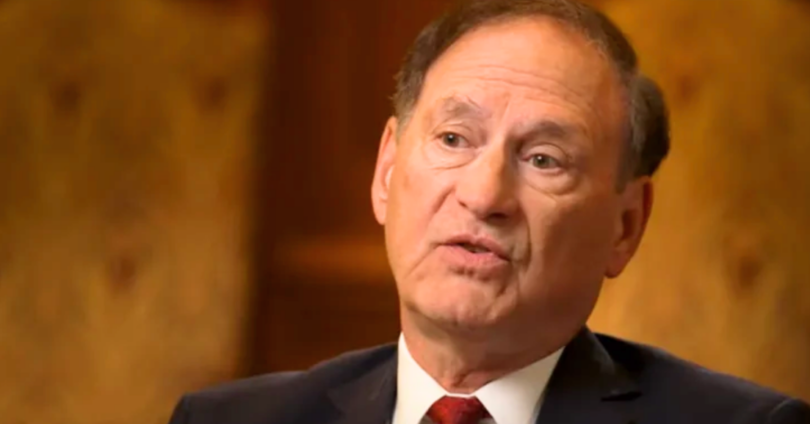
A retirement report about Supreme Court Justice Samuel Alito published by NPR turned out to be completely false, and the network scrambled to pull it down before the damage spread further.
Legal correspondent Nina Totenberg penned the now-deleted article, declaring that Alito planned to leave his seat on the nation’s highest court.
Alito has held that seat since 2005, when President George W. Bush placed him on the bench.
Within a short window, the claim ricocheted across news feeds and social platforms, gaining traction before anyone at NPR caught the mistake.
Staff at the network removed the piece entirely and replaced it with a formal editor’s note admitting fault.
That note bluntly stated the article “was published in error.”
NPR went further, confirming that Alito “has not announced his retirement,” flatly reversing the initial claim.
A handful of other media organizations had already run with the false story, prompting them to scramble and issue their own corrections or wipe the posts from their platforms.
Speculation quickly formed around how such an error occurred, with one reporter suggesting NPR may have prepared the story in advance based on a tip, then published it prematurely by mistake.
Timing made the blunder even more notable, since it landed on the same day the Supreme Court released its final rulings of the term.
Among those rulings was a consequential decision on birthright citizenship, a case in which Alito took a sharply dissenting stance.
Chief Justice John Roberts penned the majority opinion, determining that “children born of parents unlawfully or temporarily present in the United States” fulfill “both elements of the Citizenship Clause.”
According to Roberts, the Constitution establishes that these children “are citizens at birth.”
Alito pushed back hard in his dissent, describing the ruling as simultaneously “one of the most important decisions in the history of the Court” and “a serious mistake.”
His dissent pointed to a “careful analysis of the text of the Fourteenth Amendment and the process that led to its adoption,” which he argued shows the amendment “does not degrade the concept of United States citizenship in this way.”
Alito’s own reading of the Fourteenth Amendment held that it “confers citizenship on only those children who, at birth, owe allegiance solely to this country.”
At the center of the legal battle sat an executive order President Trump signed on January 20, 2025, his first day back in office for a second term.
That order sought to deny automatic citizenship to children born in the United States if their parents were present illegally or on a temporary basis.
The Court’s ruling struck down that order, dealing a blow to one of Trump’s early second-term policy initiatives.
Both stories broke on the same news cycle, creating a whirlwind day for Supreme Court coverage even before the fake retirement claim entered the picture.
NPR has offered no further comment on how the erroneous story made it to publication or whether internal changes will follow.
As of now, Alito continues serving on the Supreme Court, with no official word from him or the Court suggesting any departure is imminent.
The episode leaves lingering questions about editorial standards at NPR, even as the network insists the correction closes the matter.
Continue Scrolling for the Comments
Leave a Comment