
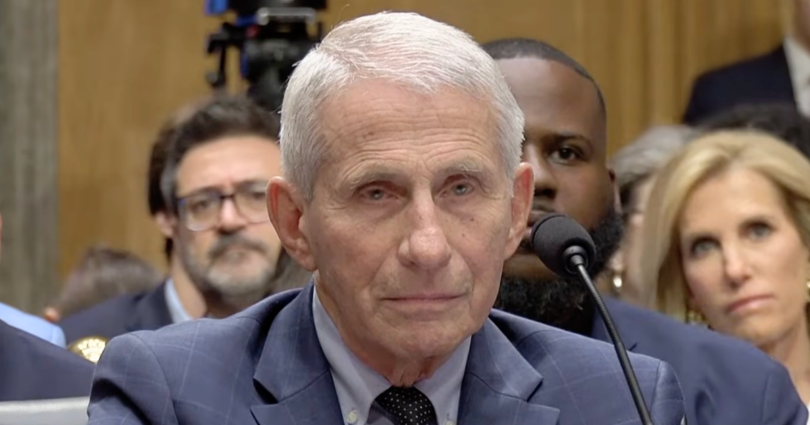
Anthony Fauci Faces Possible Imprisonment as Republicans Move to Hold Former CDC Chief in Contempt of Congress
Calls from Republican lawmakers and conservative commentators to imprison former White House chief medical adviser Dr. Anthony Fauci intensified following his appearance before a Senate committee, but legal experts say significant constitutional and procedural obstacles stand in the way.
Fauci repeatedly invoked his Fifth Amendment right against self-incrimination during a hearing chaired by Kentucky Sen. Rand Paul (R), declining to answer questions related to the COVID-19 pandemic more than 100 times.
In an opening statement, Fauci said he believed the hearing was intended to force him into making statements that could later be used against him.
“The only conclusion I can reach is that the sole reason he is calling me before this committee is to get me to say something, anything, that could vindicate his repeated public pledges that I end up, in his words, ‘behind bars,’” Fauci said.
Following the hearing, several prominent conservative figures argued Fauci should face criminal consequences.
Former Trump adviser Steve Bannon questioned why Fauci had not been arrested, while conservative commentator Matt Walsh similarly asked why the former public health official had not faced legal consequences.
Paul has argued that Fauci’s preemptive presidential pardon issued by former President Joe Biden may affect his ability to invoke the Fifth Amendment.
Biden’s pardon covers potential federal offenses committed between 2014 and 2025 but does not apply to any conduct occurring afterward.
Paul said his committee plans to vote on whether to hold Fauci in contempt of Congress after refusing to answer lawmakers’ questions.
A contempt of Congress citation carries a potential penalty of up to one year in jail and a fine of up to $100,000.
However, legal experts interviewed by WIRED said such an outcome is unlikely.
According to the report, even if the committee approves a contempt referral, it would still require 60 votes in the Senate to succeed, meaning Republican lawmakers would likely need Democratic support.
Barbara McQuade, former U.S. attorney for the Eastern District of Michigan, told WIRED that Fauci remains protected by the Fifth Amendment despite receiving a pardon.
“Each of us has a constitutionally guaranteed right against self-incrimination as long as we have a reasonable fear of criminal prosecution,” McQuade said.
She argued Fauci could reasonably fear prosecution for statements made after the pardon, including possible allegations of perjury or false statements to Congress.
Constitutional scholar Aziz Huq also told the publication that presidential pardons cannot protect future conduct.
According to Huq, if Fauci believed his testimony could expose him to future criminal liability, invoking the Fifth Amendment would generally be legally permissible.
McQuade added that Congress could compel Fauci’s testimony only by granting him immunity that would prevent the Justice Department from using his testimony against him in a criminal case.
While Biden’s pardon shields Fauci from potential federal prosecution for actions during the covered period, it does not protect him from possible state investigations.
Florida Attorney General James Uthmeier announced after the hearing that his office is opening an investigation into Fauci related to the COVID-19 pandemic, although he did not specify what potential violations investigators are examining.
Fauci’s attorney, David Schertler, defended his client’s decision to invoke the Fifth Amendment, telling CBS News he is confident Fauci acted within his constitutional rights.
Continue Scrolling for the Comments
Leave a Comment