
Hillary Clinton Admits Trump Intimidated Her During Infamous 2016 Presidential Debate
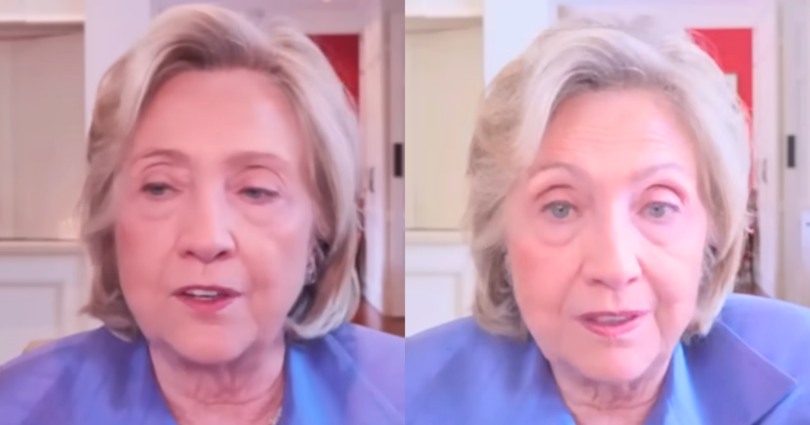
Former Secretary of State Hillary Clinton admitted that President Donald Trump intimidated her during their second presidential debate in 2016, recalling how she debated whether to confront him or ignore him as he stood behind her onstage.
Clinton discussed the October 2016 debate during a recent appearance on Kara Swisher’s “Pivot” podcast.
The debate, held at Washington University in St. Louis, came two days after the release of an Access Hollywood recording in which Trump made controversial comments about women.
A widely circulated photograph from the debate showed Trump standing behind Clinton while she spoke.
Clinton said she had thought about the moment many times and recalled being aware of Trump’s physical presence as he stood behind her.
At the same time, she was answering questions and considering whether turning toward Trump or moving away from him would make her appear rattled.
Clinton said she ultimately chose to ignore him because she did not want to appear nervous or give the impression that she could not handle the situation.
“I think he was trying to actually provoke something out of me,” Clinton said during the podcast interview.
She added that, in hindsight, responding directly might have produced what she described as “some, you know, great good stuff.”
Clinton previously described the encounter in her 2017 memoir, “What Happened.”
In that account, she wrote that Trump repeatedly followed her closely around the debate stage, stared at her, and made faces, Trending Politics reported.
She described the experience as uncomfortable and said she considered whether to remain composed or directly confront him.
The debate was the second of three presidential debates between Clinton, the Democratic nominee, and Trump, the Republican nominee.
Trump ultimately defeated Clinton in the November election, winning the Electoral College while Clinton received more votes nationwide.
Clinton also used the podcast interview to discuss the challenges Democrats face in the 2026 elections, including divisions within the party over how candidates should respond after losing a primary.
She pointed to her own experience, saying some Democrats were reluctant to support her after she secured the party’s presidential nomination.
Clinton also referenced former Vice President Kamala Harris, saying she encountered similar resistance from some Democrats.
Clinton argued that Democrats who lose primary contests should ultimately support the party’s nominee.
Clinton also discussed the Michigan Senate race, saying the Democratic nominee would need to win over voters who supported Rep. Haley Stevens in the primary and appeal to independents.
Abdul El-Sayed narrowly defeated Stevens in the Michigan Democratic Senate primary, receiving 48.5 percent of the vote to Stevens’ 47.5 percent.
El-Sayed will face Republican Mike Rogers in the November general election.
Clinton also said Democratic candidates should expect Republicans to use labels such as “communist” and “socialist” against them and should be prepared to respond to those attacks, according to LifeZette.
El-Sayed has campaigned on progressive policies, including Medicare for all and removing corporate money from politics.
Progressive streamer Hasan Piker has also publicly supported his campaign.
If elected in November, El-Sayed would become the first Muslim senator in U.S. history.
Clinton’s comments come as El-Sayed begins the general-election campaign and seeks to expand his support beyond Democratic primary voters.
WATCH:
Continue Scrolling for the Comments
Leave a Comment